
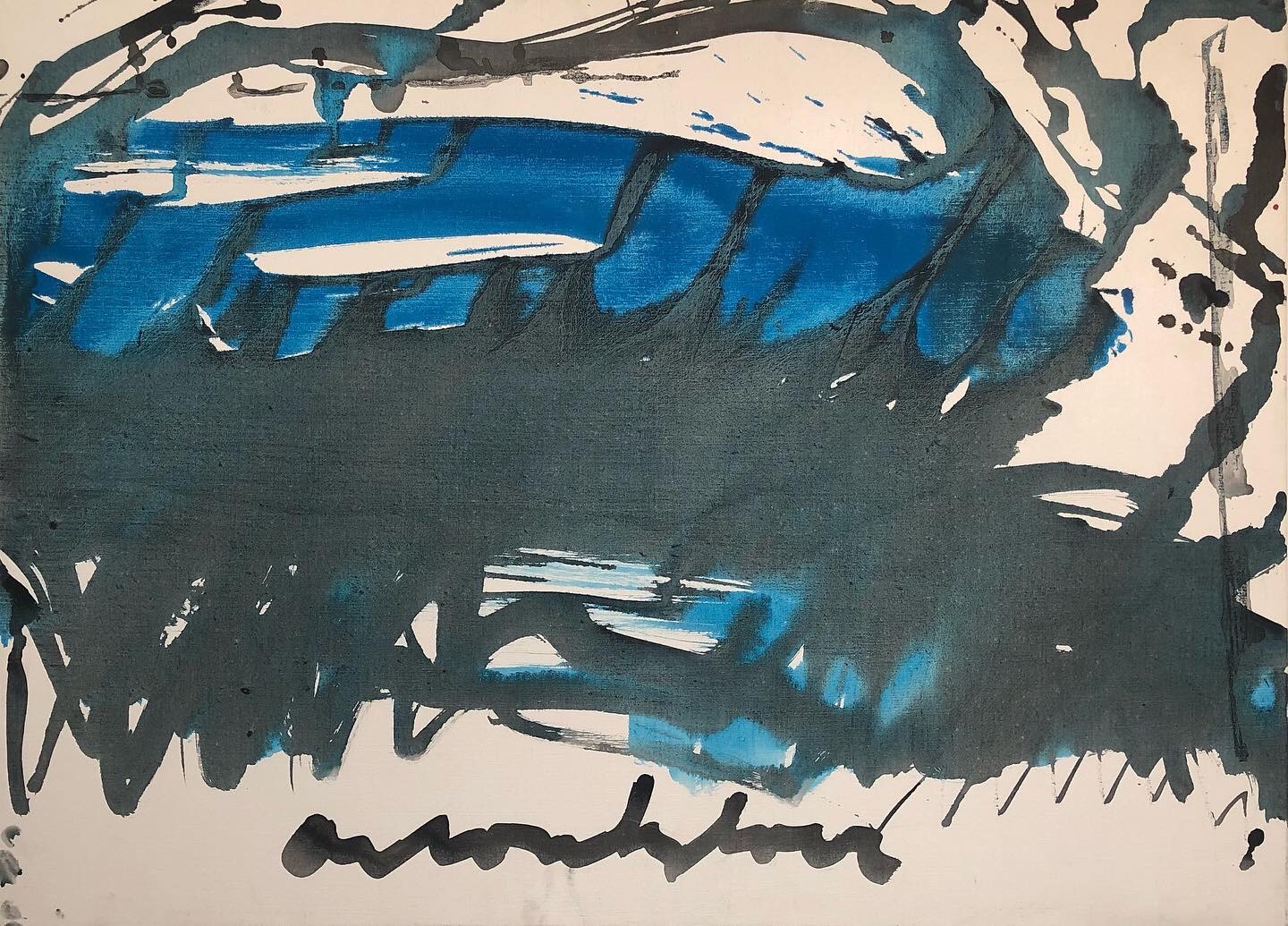
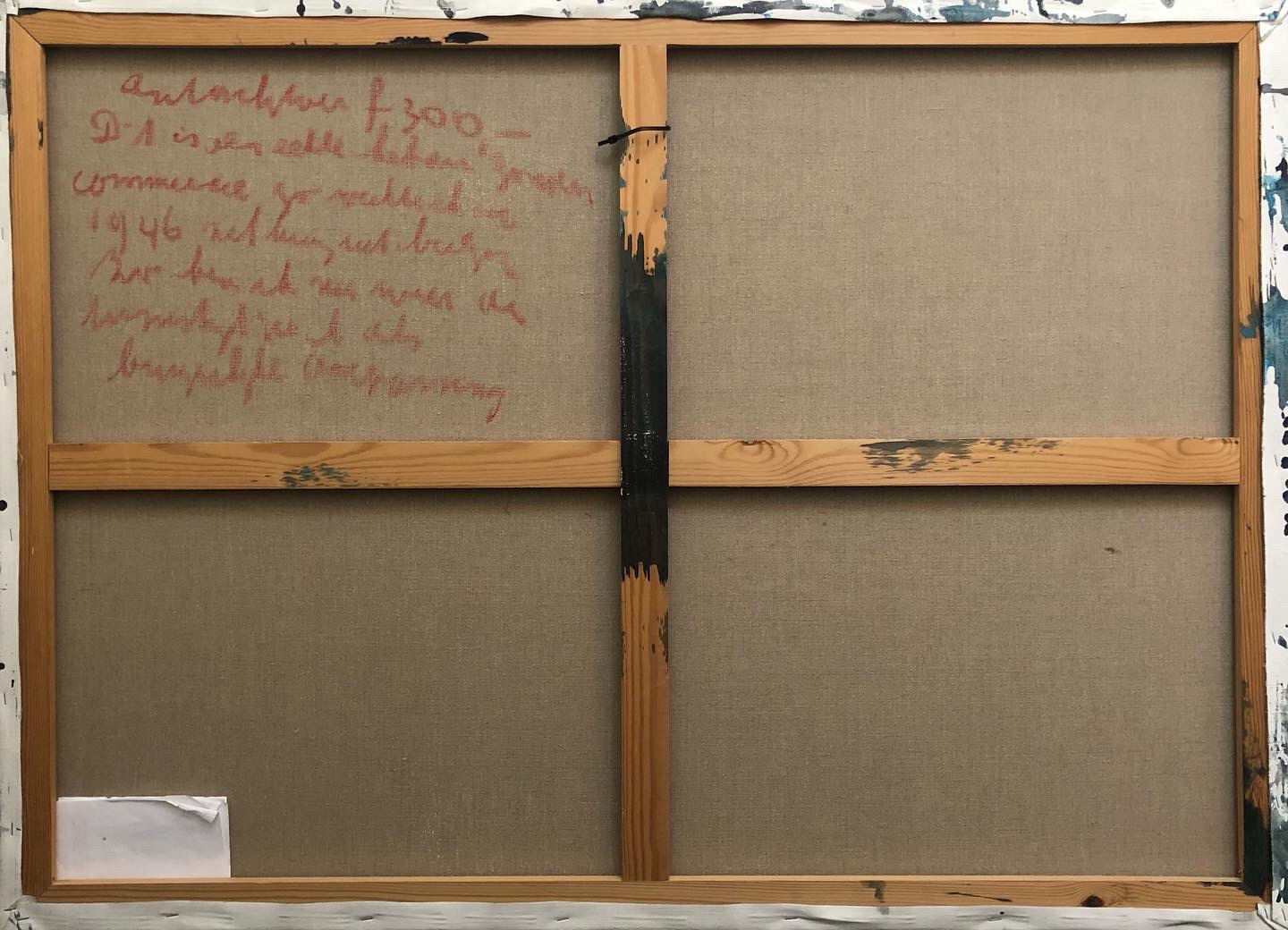
Vinkevener, 1946
€300
- Anton Heyboer (1942-2005)
- Oil on canvas
- Signed and dated
- 80 x 110 cm
- Not framed
Sold
Anton Heyboer was born in Sabang in 1942 and died in Den Ilp in 2005. He trained as an engineer. In 1961, he settled on a farm in den Ilp, where he he created drawings, paintings and etchings. Heyboer’s work can be found in many public museum and private collections. It was primarily his work from the 1950s and 1960s that caused a furore. These massive sheets of graphics on which Heyboer had etched his ‘system’ depicted a mystical combination of Buddhist and Christian influences, male and female figures among primitive motifs and arranged according to the golden ratio, which is the idea that the human eye subconsciously recognises the ideal size ratio. At the time, this work gave him a renown comparable to the status of the CoBrA artists.
