
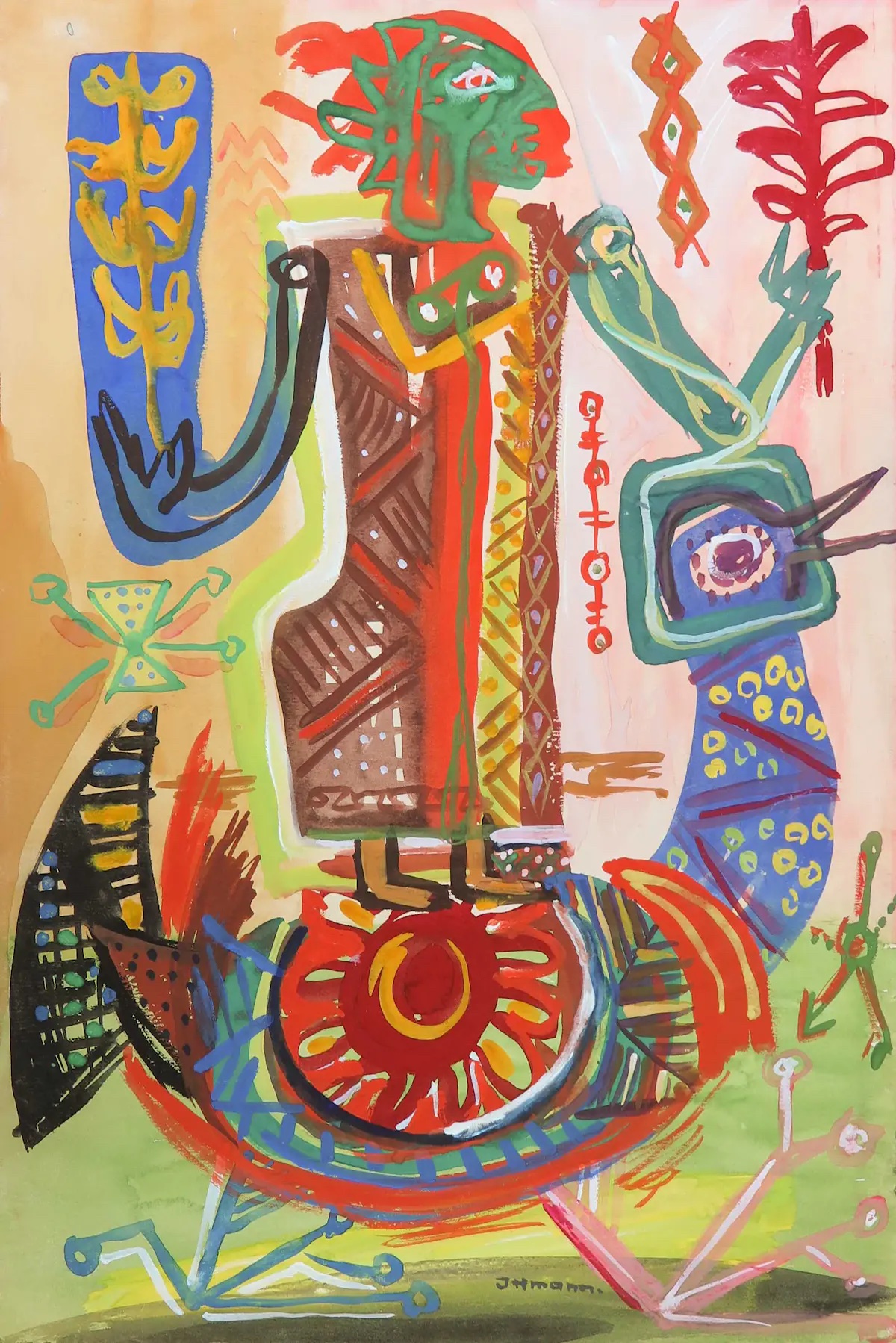
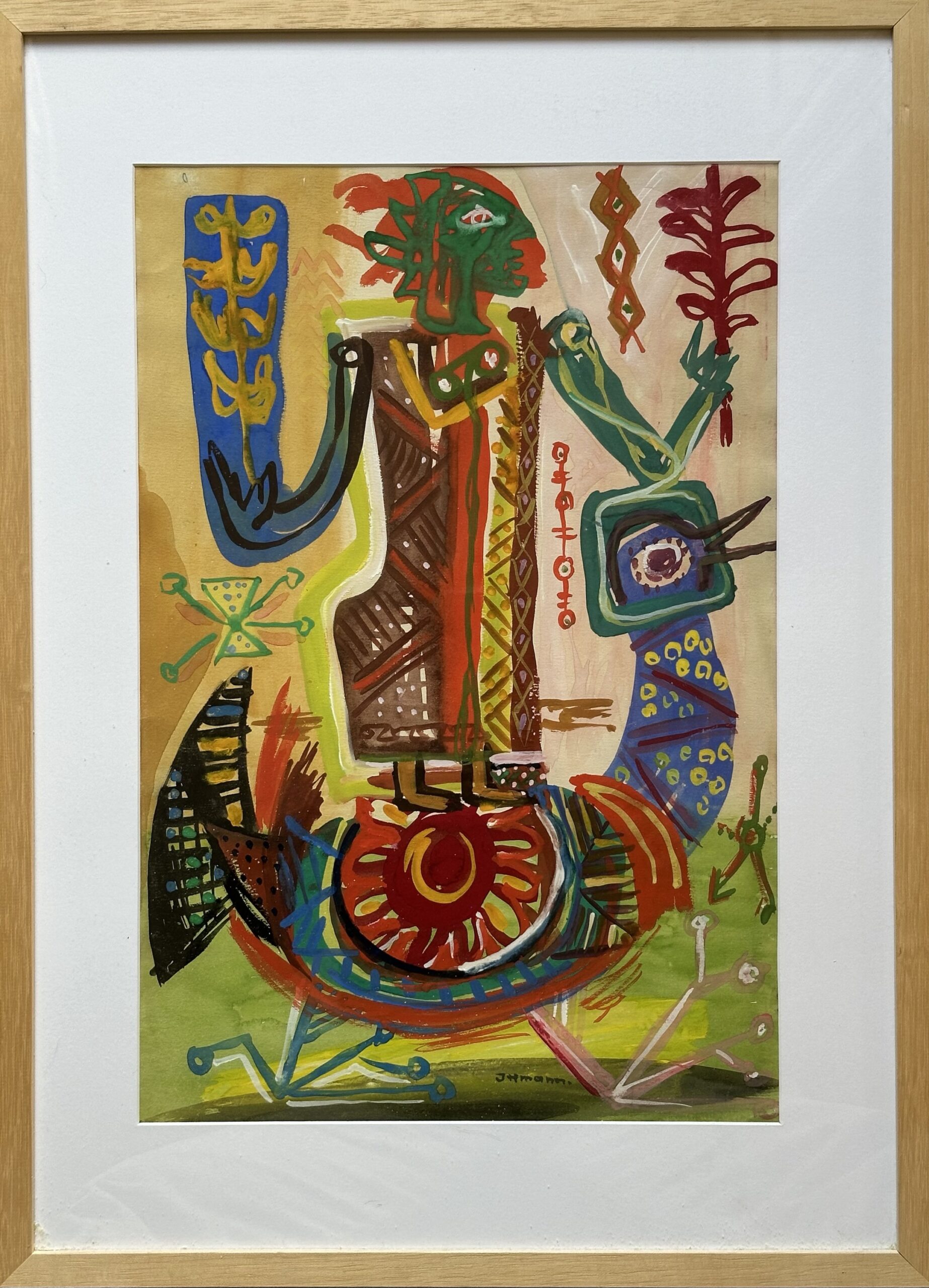
Figure and bird
€425
- Hans Ittmann (1914-1972)
- Watercolour on paper
- Signed in lower right
- 70 x 50 cm
- Framed
Sold
Hans Ittmann (1914-1972) was a prominent Dutch sculptor and painter whose work significantly contributed to the modernist movement in the Netherlands. Born on May 2, 1914, in Surabaya, Indonesia (then part of the Dutch East Indies), Ittmann moved to the Netherlands at a young age. He pursued his artistic education at the Royal Academy of Art in The Hague, where he initially focused on figurative art.
During the early stages of his career, Ittmann’s work was heavily influenced by traditional styles, but he gradually embraced abstraction as he became more involved with modernist trends. This shift was marked by a growing fascination with organic forms and the fluidity of natural shapes, which became central themes in his sculptures and paintings. His work is characterized by smooth, flowing lines and a sense of movement, often inspired by the human body and nature.
Ittmann was not only a practicing artist but also an active participant in the Dutch art community. He exhibited widely across the Netherlands and gained recognition for his innovative approach to sculpture. His works were included in several important exhibitions, and he was associated with key art groups that promoted modernist ideals.
Despite his relatively short life, Ittmann left a lasting impact on the Dutch art scene. His sculptures, often made from materials like wood, stone, and metal, can be found in public spaces and museums throughout the Netherlands. He passed away on January 8, 1972, leaving behind a legacy of creativity that continues to be appreciated by art enthusiasts and scholars alike.
