
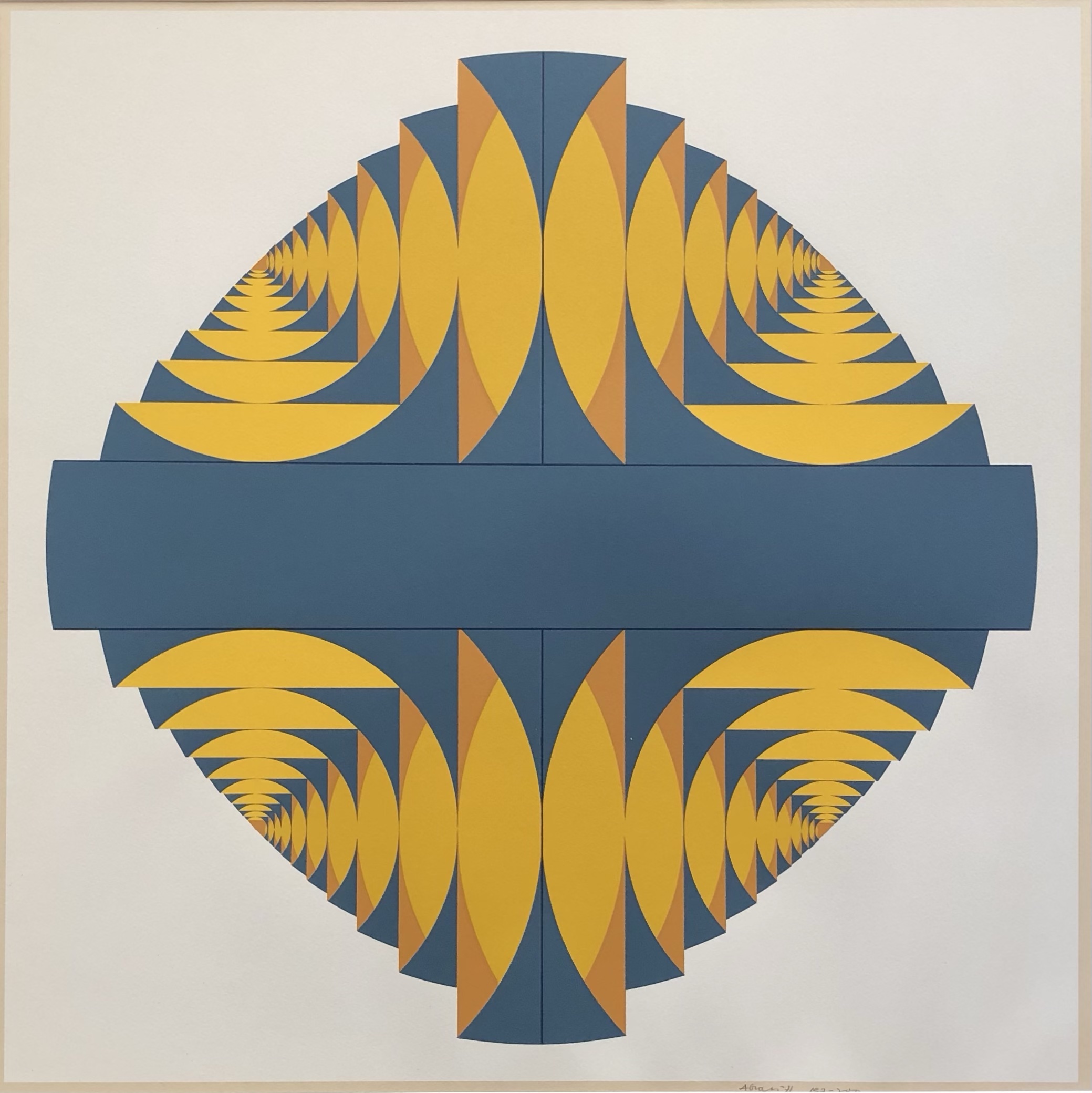
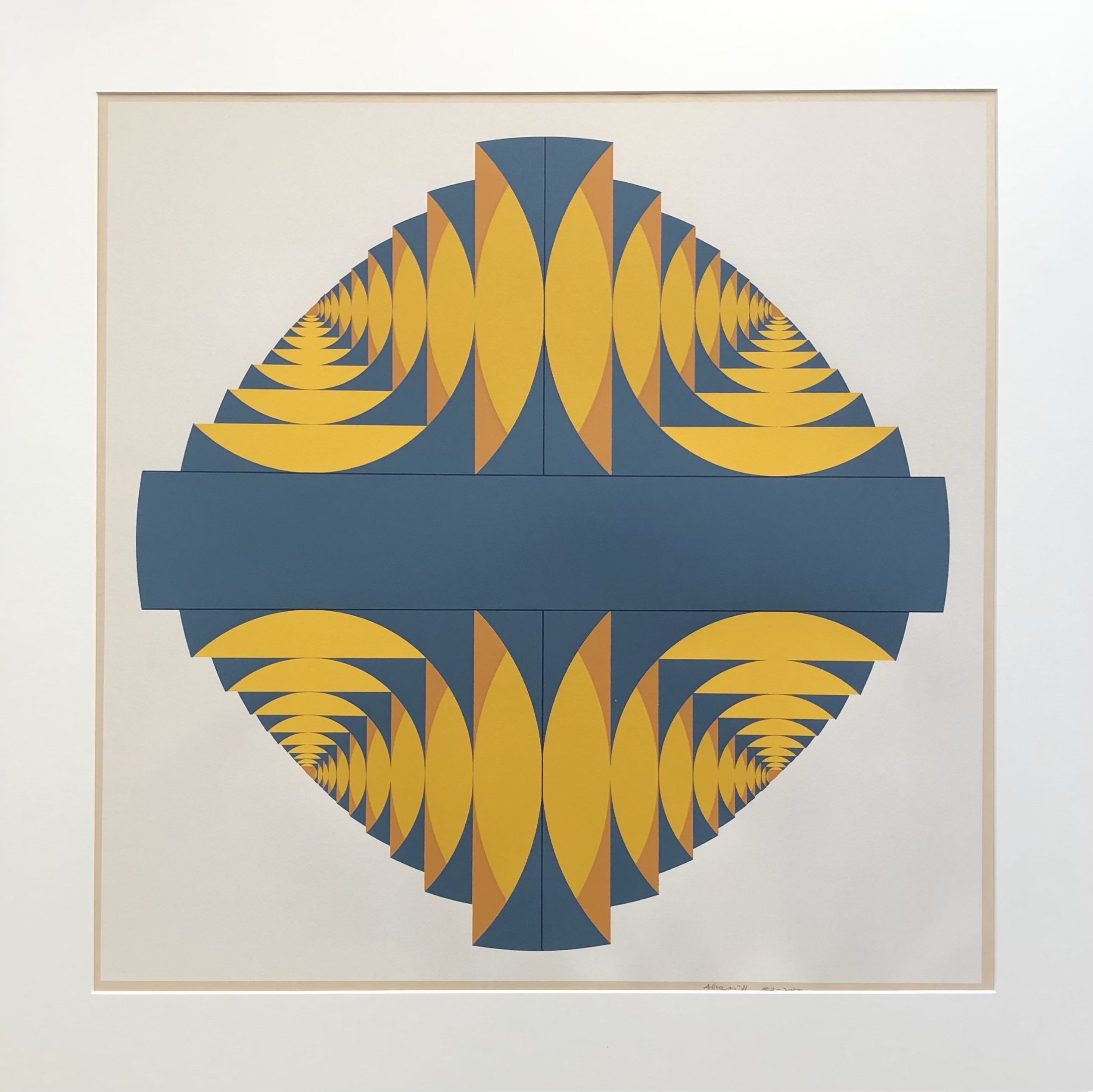
Geometric composition, 1971
€425
- Ronald Abram (1938-1999)
- Lithograph
- Signed and dated in lower right
- 70 x 70
- Framed
Sold
Ronald ‘Ronny’ Abram was born in Amsterdam-Zuid in 1938. As a 7-year-old Jewish boy, he came out of Bergen-Belsen concentration camp as an orphan and was put in a Jewish orphanage in the Netherlands. The war continued there for him as he had a terrible time. Fortunately, an uncle and aunt took him to the East Indies two years later as their third son. For Ronny, that time finally meant peace.
As an artist, Abram turned his memories of the camp years later in France, into large-scale expressive drawings. He battled with the past, with the feeling that his parents had abandoned him, in that horrible camp.
Ronny tried to turn his lost memories of the war into images. Big, desperate, beautiful drawings with mountains of jumbled naked bodies. ‘This is not what you saw, but what you would have liked to have seen,’ said Gerhard Durlacher. Abram also painted urban landscapes without people, the massacre in Bosnia, and fierce loves (‘Amor natural’).
Next to that, Abram made mainly non-figurative, abstract work through etching technique, copper engravings, lithography and screen prints. He also made pen drawings. Abram also enjoyed working with water colours and pastels.
Abram stayed in Enschede until 1961 and spent a year in Paris from 1969 to 1970. From 1989, he lived in Amsterdam. He trained at the Academie voor Kunst en Industrie in Enschede and the École des Beaux-Arts in Paris. He was a member of Arti et Amicitiae in Amsterdam.
In 1964, he won first prize at the Prix de Peinture in Biarritz, France.Several works by Abram can be found in the collection of the Jewish Historical Museum in Amsterdam.
Ronny Abram died unexpectedly of a brain hemorrhage in 1999, aged 60. Toon Tellegen called him in a poem; ‘Small, undaunted giant’.
