
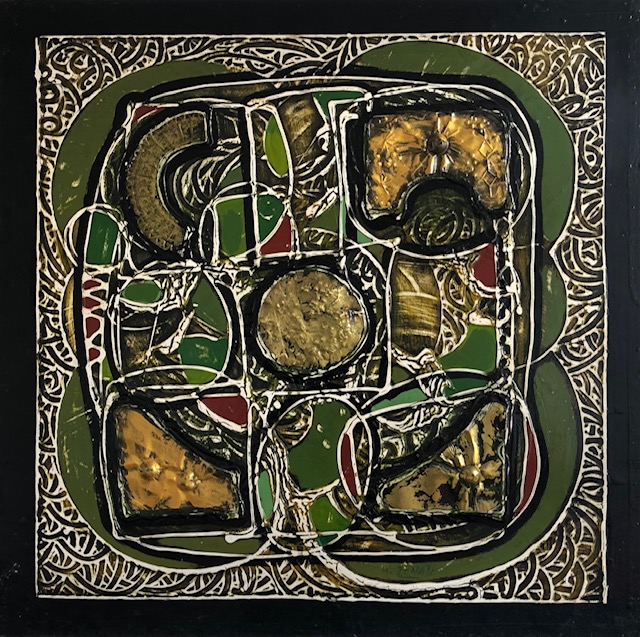
Composition, 1980-90
€550
- Abderrahmane Zenati (1943)
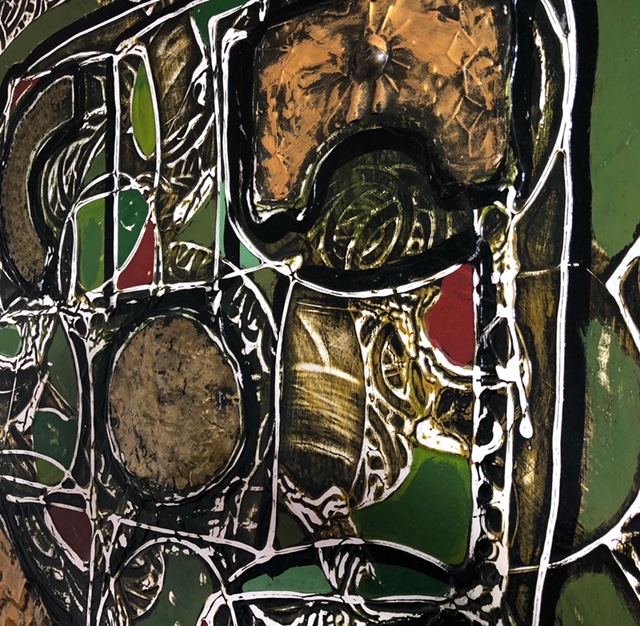
- Mixed media on board
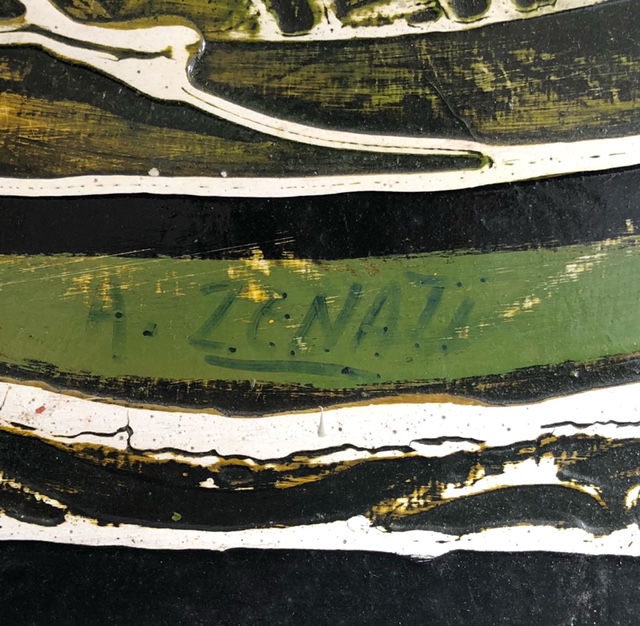
- Hand signed
- 90 x 90 cm
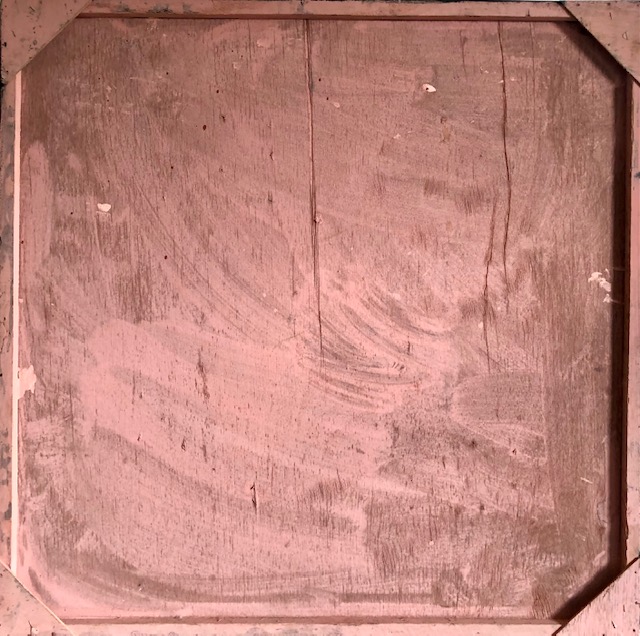
- Not framed
Sold
Abderrahmane Zenati (1943), born in Oujda, Morocco, was orphaned at a very young age when his father died, who was a Moroccan pirate under the French flag. From then on, Zenati found himself fatally abandoned on the streets, left to his own devices in a pitiless city in Morocco.
Without attachment or reference point, he wanders the streets and wastelands of his birthplace. In order to survive, he gets into the habit of feeding himself with the scraps left in rubbish bins, which he fought over with mangy dogs and alley cats.
At the age of twelve, Zenati found himself confined to a hospital bed in Oujda, his lungs perforated by tuberculosis, as a result of living in filth and eating anything he could find. It was there, in the face of pain, in the face of deep discussions between patients, that he became aware of the reality of life. He, who until then had only been concerned with survival, suddenly had the thought of what his future could be like. And alone, in his sick bed, by instinct, he began to draw on any paper he could get his hands on. With passion, little by little, he began to read and soon to write.
He dreamed of becoming a painter, but did not know that it was possible to do so without going to school. With a past full of hardship, suffering and adventures, he nevertheless held on. He had the merit of learning to read and write on his own. Since then, he has never stopped devouring books on art, culture and especially painting.
For more than 40 years, Zenati has devoted himself to art in all its forms, from painting to writing, including music and theatre. Living in Oujda, he uses his frequent walks through the deep medina of this mysterious thousand-year-old city to enrich his palette and his pen. Zenati, considered by those who know him to be a living legend, has exhibited his work in Morocco and abroad, notably in France and Germany.
Zenati is the first Moroccan painter and writer of international renown. His surname stems from the Zenata tribes of Morocco and Algeria, founders of Oujda.
